.svg)


.png)
.png)


.svg)




.png)


.png)

Construction Document Management System: Features, Benefits, and How to Choose the Right One
Explore how a modern Document Management System (DMS) simplifies construction workflows, improves version control, and enhances collaboration across AECO teams.


A construction document management system (DMS) is a digital platform that stores, organizes, tracks, and controls access to all project documentation—drawings, specifications, contracts, RFIs, submittals, and compliance records—in one centralized, secure environment. In the construction industry, documentation forms the backbone of every project stage, from conceptual design to final delivery and post-completion handover. Each phase generates a vast array of critical documents, including blueprints, specifications, contracts and compliance records. Managing this volume of information effectively, particularly across multidisciplinary teams and complex project scopes, is a significant challenge. This is where a Document Management System (DMS) proves indispensable, offering a structured, centralized approach to handling construction data with accuracy, transparency and control.
Key Takeaways
- A construction document management system centralizes every project file—drawings, contracts, RFIs, submittals, and as-builts—so teams work from a single, reliable source of truth.
- Core capabilities to prioritize include access control, version control and audit trails, real-time collaboration, metadata tagging, and cloud accessibility.
- Poor documentation drives rework and delays; firms increasingly invest in document software and mobile field access to close these gaps.
- The right DMS supports design teams, contractors, project managers, and owners across the full project lifecycle.
- When choosing a system, evaluate security, integrations, mobile access, compliance, and ease of adoption.
- CUBE offers a purpose-built DMS designed for the demands of AECO projects.
What Is a Document Management System (DMS)?
A construction document management system is a digital solution that enables teams to store, organize, track, and control access to documents in a centralized and secure environment. It ensures that every file, from architectural drawings and technical reports to contracts and RFIs, is accessible, up-to-date and traceable throughout the project's lifecycle. Unlike generic file storage, a construction-specific DMS understands the workflows unique to the built environment—drawing revisions, submittal logs, transmittals, and handover documentation—and enforces the controls needed to keep those processes accurate and auditable.
To learn how digital tools underpin modern documentation, see streamlining construction with digital tools.
Why Construction Needs a Robust DMS
Construction needs a robust DMS because projects generate enormous volumes of documents across dispersed teams, and fragmented information leads directly to rework, missed approvals, and costly delays. Without a structured system in place, cumbersome version management, missed approvals and document silos can delay the access to actionable insights, impeding decision making and slowing the progress down and create costly errors. A DMS solves these by:
- Centralizing documentation across teams and locations
- Streamlining approvals and tracking updates
- Ensuring version control and auditability, bolstering accountability
- Enhancing collaboration and reducing miscommunication
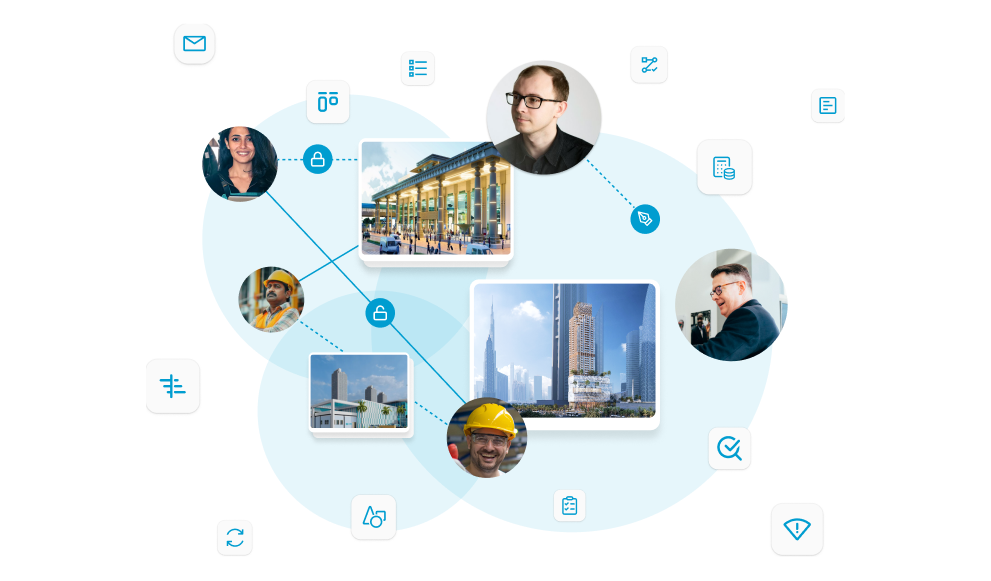
Ever since the paradigm-altering digital transformation took over construction, an industry rife with documents where precision, compliance and accountability are paramount, a reliable Document Management System isn't just optional, it's foundational.
The demand signals are clear. Roughly 40% of construction firms said they expected to increase investment in document management software in 2025, and 53% reported using mobile software to share drawings, photos, and documents in the field (AGC of America, 2025 Construction Hiring and Business Outlook Report). At the same time, 76% of construction executives said technology is critical to their strategic priorities over the next 12 months, yet 68% admitted digital systems and processes have significant room for improvement (KPMG Global Construction Survey 2025/2026). A capable DMS is one of the most direct ways to close that gap.
Key Features of an Effective Construction DMS
The most effective construction document management systems combine access control, version control with audit trails, real-time collaboration, metadata tagging, and cloud accessibility—features that keep the right information current, secure, and available to every stakeholder. Not all document management systems are built equally. For AECO (Architecture, Engineering, Construction and Operations) teams, an effective Document Management System should offer:
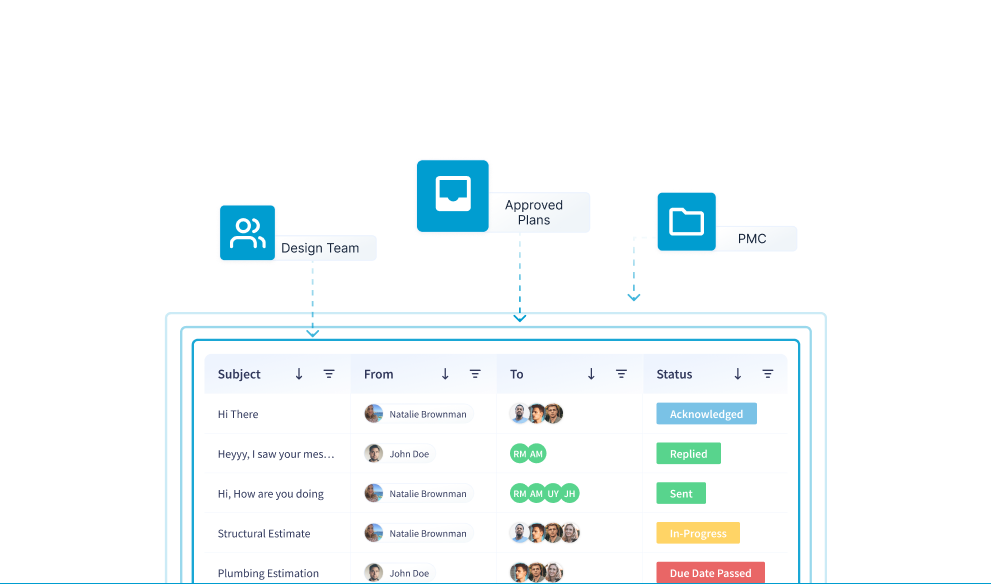
- Access Control: Role-based permissions to ensure the right people see the right information.
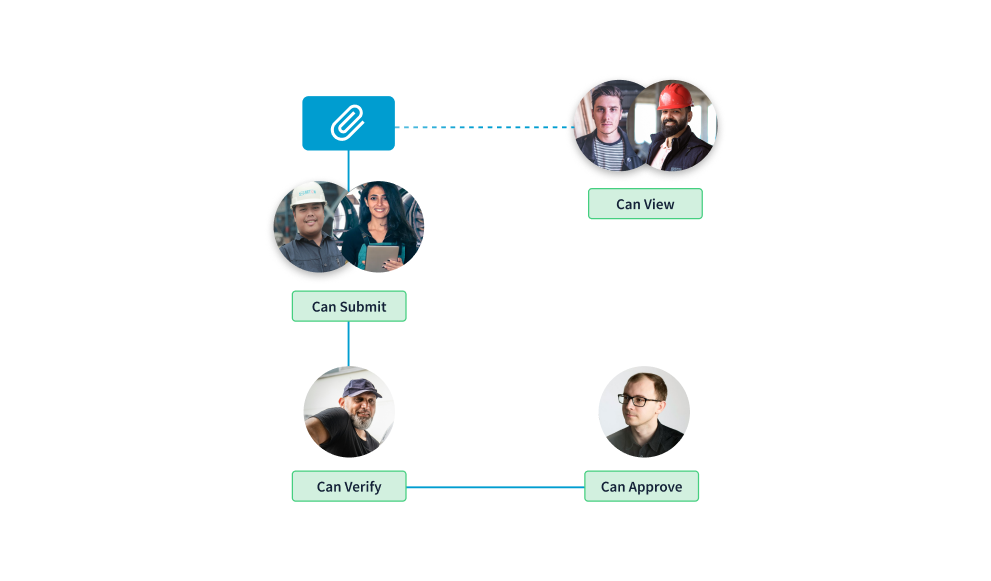
- Version Control & Audit Trails: Automatic tracking of document revisions to avoid errors and confusion along with full visibility into who accessed, changed or approved a document.
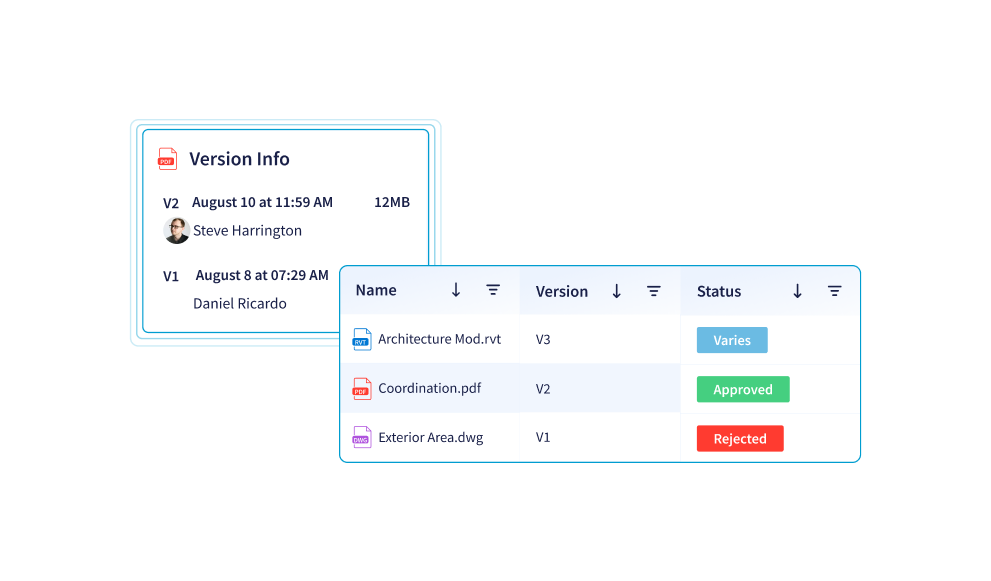
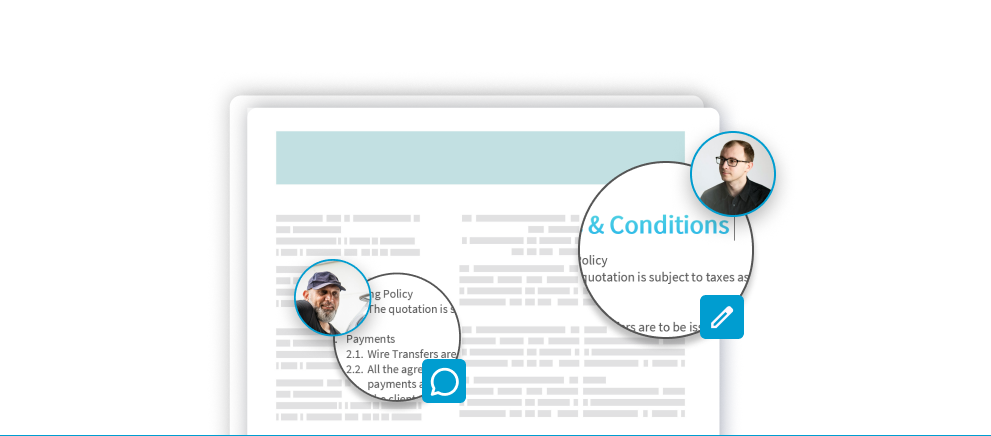
- Real-Time Collaboration: Ability for teams to comment on, share and update documents on the go.
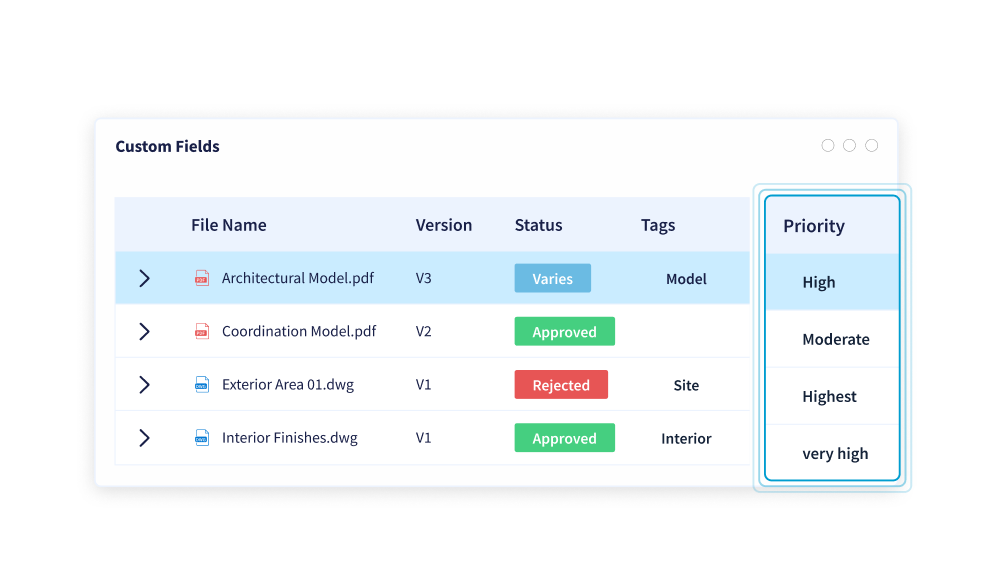
- Metadata Tagging: Smart classification and quick search functionality.
- Cloud Accessibility: Secure access from anywhere, onsite or remote.

The table below summarizes the core capabilities and why each one matters on a live project.
Security in particular deserves scrutiny. Among contractors' biggest IT challenges, 41% cited keeping company data secure from hackers, 32% cited communication between field and office, and 28% cited integration between the software they use (AGC of America). Explore this further in data security in construction document management.
How to Choose a Construction Document Management System
To choose the right construction document management system, evaluate it against your project security needs, required integrations, mobile field access, compliance standards, scalability, and how easily your teams will adopt it. Use this checklist during evaluation:
- Security and permissions — Confirm enterprise-grade encryption, role-based access, and audit logging.
- Version control — Ensure only current documents are surfaced and every revision is traceable.
- Mobile and field access — Verify offline and on-site usability, since field-to-office communication is a top pain point.
- Integrations — Check that it connects with your project management and design tools to avoid data silos.
- Compliance — Look for support for ISO standards and audit requirements relevant to your contracts.
- Scalability — Make sure the platform handles multiple concurrent projects and growing document volumes.
- Ease of adoption — An intuitive interface drives faster rollout and higher team compliance.
For a deeper look at platform capabilities, review the top features of a project management information system and the role of BIM in construction document management.
Driving Efficiency Through Document Management
A document management system drives efficiency by automating routing, notifications, and version tracking, so teams spend less time chasing files and more time delivering work. When implemented correctly, a Document Management System acts as the backbone of project communication and compliance. It speeds up workflows, reduces rework, improves team coordination and supports better decision-making. By automating document routing and notifications, teams spend less time chasing files and more time delivering outcomes.
The upside is substantial. McKinsey estimates that AI and other automation technologies could unlock roughly $228 billion in annual value in the U.S. AEC industry by 2030, and that AI could automate about 39% of nonphysical work—much of it document-heavy and coordination-heavy (McKinsey). A well-structured DMS is the foundation that makes that automation possible by keeping documentation clean, connected, and machine-readable. See how in CUBE: secure and centralized document management.
Applications of a Document Management System in AECO Projects
In AECO projects, a document management system serves every stakeholder—design teams manage iterations, contractors track submittals and drawings, project managers oversee approvals and RFIs, and owners access as-built documentation at handover. A modern DMS adapts to the specific documentation needs of various stakeholders:
- Design Teams can manage and share design iterations efficiently.
- Contractors can track submittals, drawings, and work orders in one place.
- Project Managers gain visibility into approvals, RFIs, and progress reports.
- Clients and Owners have panoramic visibility into the project's progress and can access as-built documentation and warranties at handover.

Whether you're building public infrastructure, commercial real estate, or industrial facilities, document control is critical to project delivery, ensuring that it is on time, within scope and within budget.
For a real-world example, explore how document control supported sophisticated document management for airport infrastructure, and why smart document management is vital for construction success.
Why Choose CUBE to Manage Your Project Documents
CUBE offers a purpose-built construction document management system that combines enterprise-grade security, standardized workflows, real-time updates, and built-in compliance to keep AECO teams aligned across every project phase. With CUBE's extensive Document Management capabilities, you can:
- ensure document integrity with enterprise-grade security
- standardize workflows across projects
- Empower site and office teams with real-time updates
- Maintain compliance with ISO standards and audit requirements
CUBE's intuitive interface, combined with powerful automation and cloud capabilities, helps AECO professionals streamline their documentation processes and focus on project delivery. This matters because cloud-based access is now mainstream—61% of firms said their cloud-hosted IT is used for project management (AGC of America)—yet fewer than half of construction firms rate themselves as tech-mature leaders, leaving significant room to gain an edge with the right platform (KPMG).
Streamline Your Project with CUBE
In today's fast-paced construction landscape, managing documentation shouldn't be a bottleneck. With CUBE's Document Management System, you gain control, visibility and confidence at every stage of your project.
Explore how CUBE can transform your document workflows and streamline project delivery. Learn more!
Conclusion
A construction document management system is no longer a nice-to-have—it is the operational backbone that keeps drawings current, approvals moving, and stakeholders aligned from design through handover. With industry data showing rising investment, mainstream cloud adoption, and major efficiency gaps still to close, the firms that centralize and control their documentation are best positioned to reduce rework, protect data, and prepare for AI-enabled workflows. Evaluating a platform against security, integrations, mobile access, and compliance will help you choose a system that grows with your projects—and CUBE is built to deliver exactly that.
Frequently Asked Questions
What is a construction document management system?
A construction document management system is a digital platform that stores, organizes, tracks, and controls access to all project documents—such as drawings, specifications, contracts, RFIs, and submittals—in one centralized, secure environment throughout the project lifecycle.
What does a construction document management system do?
It centralizes documentation, enforces version control and audit trails, manages permissions, and enables real-time collaboration—so teams always work from the latest information and can trace who created, changed, or approved every file.
Why is document control important in construction?
Document control prevents teams from working off outdated drawings, reduces rework and disputes, supports compliance, and keeps projects on time and within budget by ensuring accurate, traceable, and accessible information.
What are the key features of a construction DMS?
The most important features are role-based access control, version control with audit trails, real-time collaboration, metadata tagging for fast search, cloud accessibility, and strong security and compliance controls.
Is a cloud-based construction document management system secure?
Yes—reputable cloud-based systems use enterprise-grade encryption, role-based permissions, and detailed audit logs. This is especially important given that 41% of contractors cite data security as a top IT challenge (AGC of America).
How do I choose the right construction document management system?
Evaluate each option against security, version control, mobile and field access, integrations with your existing tools, compliance support, scalability, and ease of adoption to ensure the platform fits your workflows and grows with your projects.
.png)
.png)