.svg)


.png)
.png)


.svg)



.png)
.png)

Cloud-Based Construction Platforms: Benefits, Features & ROI in 2026
Cloud technology is reshaping the construction industry not just in data storage, but in how teams plan, execute, and operate projects. In this blog, we explore how cloud-based platforms streamline collaboration across design, execution, and O&M stages. Learn how real-time access, model-based insights, and proactive management help reduce rework, improve coordination, and unlock project efficiency from day one.


The construction industry has long grappled with disconnected workflows, manual coordination, and fragmented data. But with rising project complexity and tighter delivery timelines, the need for unified, accessible platforms has become non-negotiable.
Cloud-based construction platforms are web-hosted systems that centralize communication, documentation, scheduling, and decision-making in one connected environment—accessible from any browser, on any device, without heavy on-premise hardware. Whether you're onsite or remote, teams can collaborate in real time, access the latest project data, and align faster—reducing errors, delays, and overhead.
Cloud is no longer an edge—it's the industry standard. Cloud was the leading deployment model in the construction management software market in 2025, accounting for 63.83% of market revenue. This guide breaks down the core benefits, lifecycle use cases, and buying considerations so you can decide with confidence.
Key Takeaways (TL;DR)
- One connected environment: Cloud platforms unify communication, documents, models, and schedules so every stakeholder works from the same live data.
- Real-time collaboration: Distributed teams co-author designs, run BIM reviews, and resolve issues without email threads or version conflicts.
- Full lifecycle coverage: The same platform supports design, execution, and operations & maintenance as a single digital thread.
- Enterprise-grade security: ISO/SOC 2 certifications, encryption, and role-based access keep data safe while enabling cross-vendor collaboration.
- Mainstream adoption: 61% of contractors named project management their most prevalent cloud use in 2025, and cloud is now the dominant deployment model.
- Measurable ROI: Faster decisions, reduced rework, and complete project transparency translate into fewer delays and lower overhead.
New to the category? A cloud-based construction platform is a subscription software-as-a-service (SaaS) that replaces siloed, locally installed tools with a shared online workspace. Instead of emailing files or syncing local drives, everyone reads and writes to the same source of truth in real time.
Seamless Collaboration Across Teams and Time Zones
Cloud platforms enable seamless collaboration by letting distributed teams share documents, review designs, and mark up 2D and 3D models simultaneously from any browser—eliminating version confusion and the delays of file-by-email workflows.
Gone are the days of long email threads and disconnected file-sharing platforms. Cloud solutions enable real-time document sharing, design reviews, and markups across 2D and 3D environments accessible from any browser—no heavy hardware required.
- Teams access the latest models and revisions instantly
- Multiple stakeholders can collaborate live on BIM reviews
- Issue tracking and resolution becomes faster and more transparent
This cross-team visibility is why field operations is now a leading cloud use case—47% of firms reported using cloud technology for field operations in 2025, keeping site crews and office teams in lockstep. Learn more about streamlining construction with digital tools.
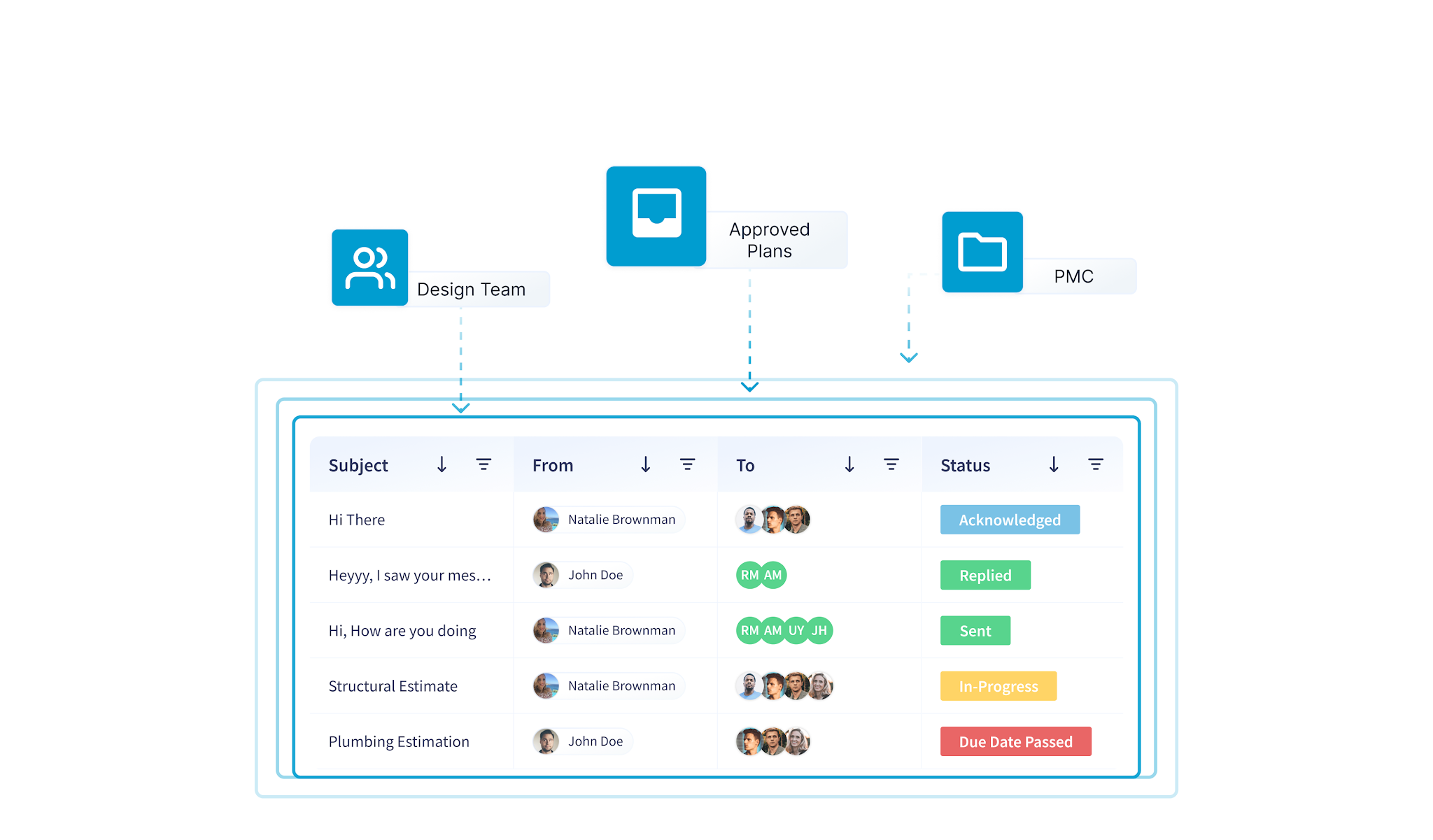
Centralized Data for Clarity & Control
Centralized cloud data means every design revision, checklist entry, and approval is logged in one workspace, creating a single source of truth that prevents version conflicts and provides a complete audit trail.
With cloud-based systems, every project update—whether it's a design revision, checklist entry, or approval—is logged in a central workspace. This ensures accountability, prevents version conflicts, and enables smarter oversight.
- Automated version updates and tracking reduce duplication
- Activity logs create a transparent audit trail
- Linked data across various forms, files, and schedules offers complete context
Document control is where firms are investing most: 40% of contractors expected to increase investment in document management software in 2025, making it one of the top software investment categories.
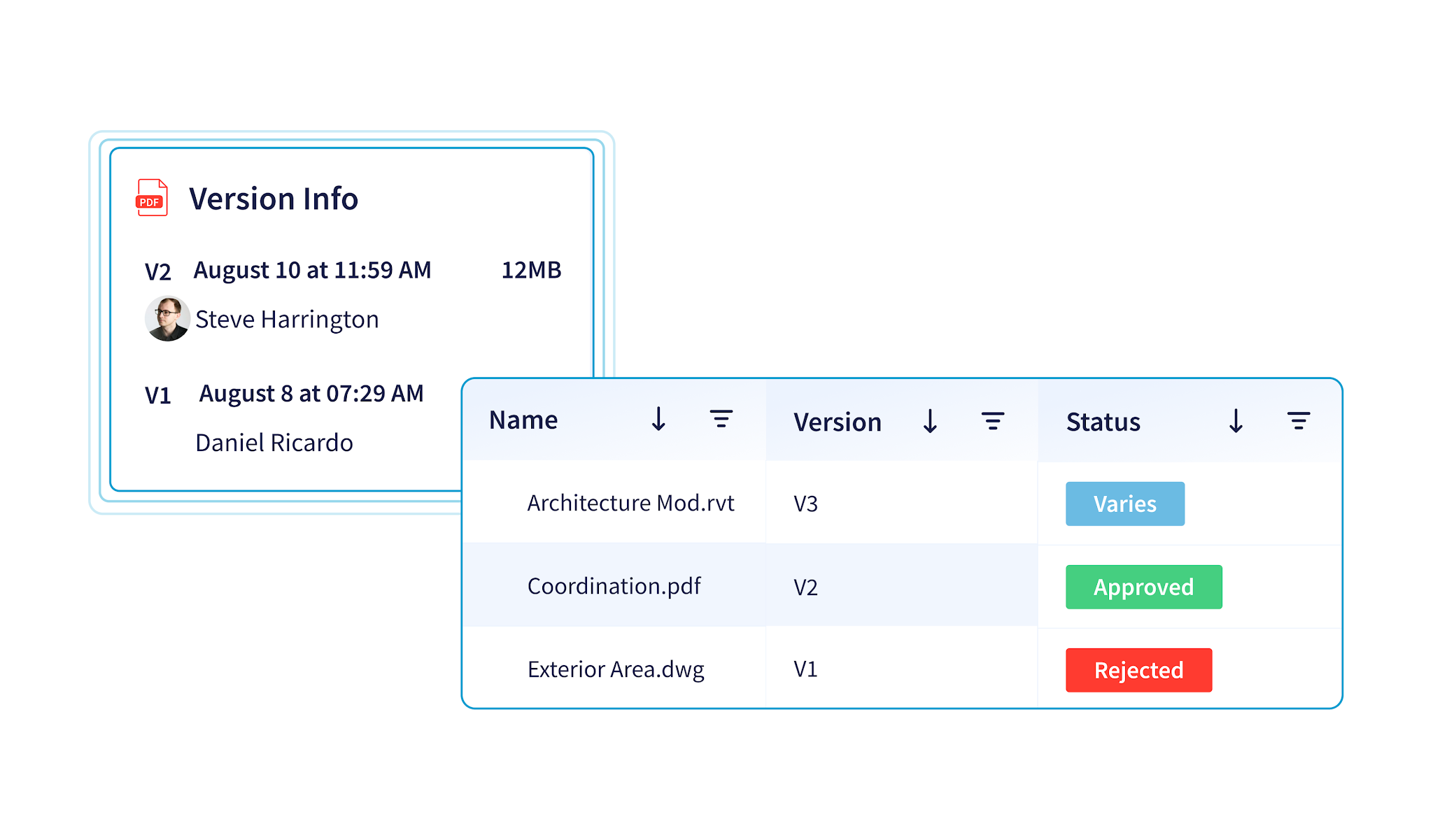
Faster Decision-Making with Real-Time Insights
Cloud platforms speed up decisions by surfacing live progress, cost, and schedule data through dashboards and mobile checklists—so teams act on current information instead of waiting for siloed reports.
From Gantt charts and dashboards to mobile-enabled checklists and site data capture, cloud tools bring visibility to the front lines. Teams are empowered to take informed decisions without waiting for siloed reports or routine syncs.
- Track progress, issues, and approvals in real time
- View 5D dashboards for integrated cost and schedule insights
- Capture on-site data with geolocation and timestamps
Project management and scheduling remain the anchor use case—accounting for 40.91% of construction management software market share in 2025—which is exactly where real-time cloud insights deliver the fastest payback.
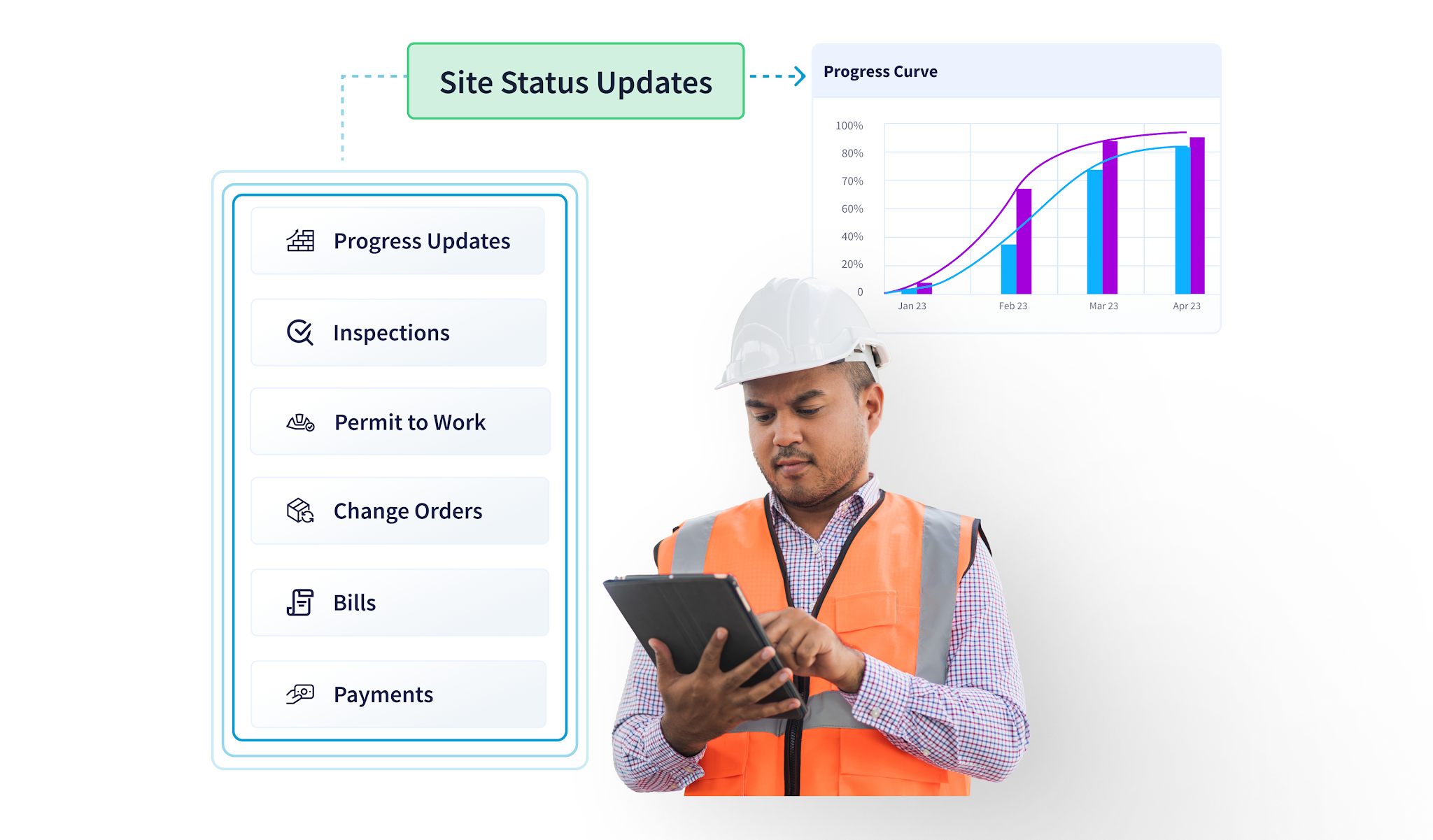
Built-In Security and Compliance
Modern cloud construction platforms protect data with ISO and SOC 2 certifications, encrypted workflows, and role-based permissions—so sensitive project information stays secure even when shared across multiple vendors.
Modern cloud solutions prioritize enterprise-grade data protection. With ISO and SOC 2 certifications, encrypted workflows, and role-based permissions, your data stays safe while teams operate with peace of mind.
- Secure collaboration across vendors
- Control who sees and edits what
- Maintain compliance with regional regulations
Security is a top-of-mind concern, not an afterthought: 41% of firms cited keeping company data secure from hackers as a top IT challenge in 2025, underscoring why certified platforms matter. See how CUBE achieved SOC 2 compliance to strengthen trust in construction data.
Get deeper insights into our compliance framework.
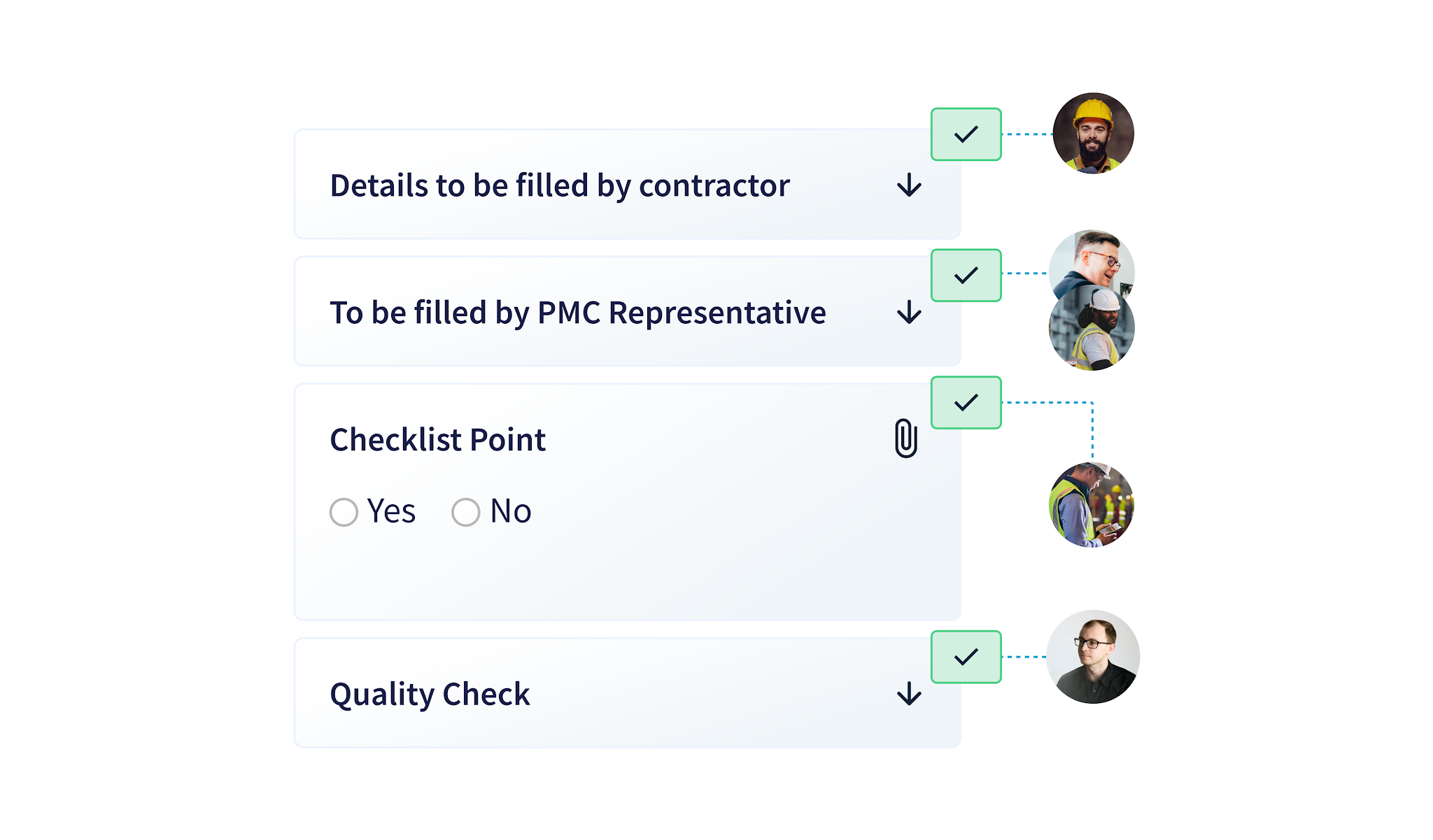
Cloud in Action Across the Construction Lifecycle
A cloud-based platform supports every project phase—design, execution, and operations—by acting as a single digital thread that carries data forward instead of losing it between stages.
A cloud-based platform isn't just a tool for one phase—it's the digital thread that connects every stage of a project's lifecycle: from design to execution to long-term operations.
1. Design Phase: Smarter Collaboration from the Start
Cloud tools eliminate version confusion and siloed design files. Architects, engineers, and consultants can co-author and review models in real time, regardless of location. Issues are resolved faster, reviews are centralized, and design intent is preserved—setting up the project for success from Day 1.
Collaborative BIM coordination with real-time clash detection helps teams avoid rework caused by outdated drawings and fragmented communication.
2. Execution Phase: Driving Precision and Accountability On-Site
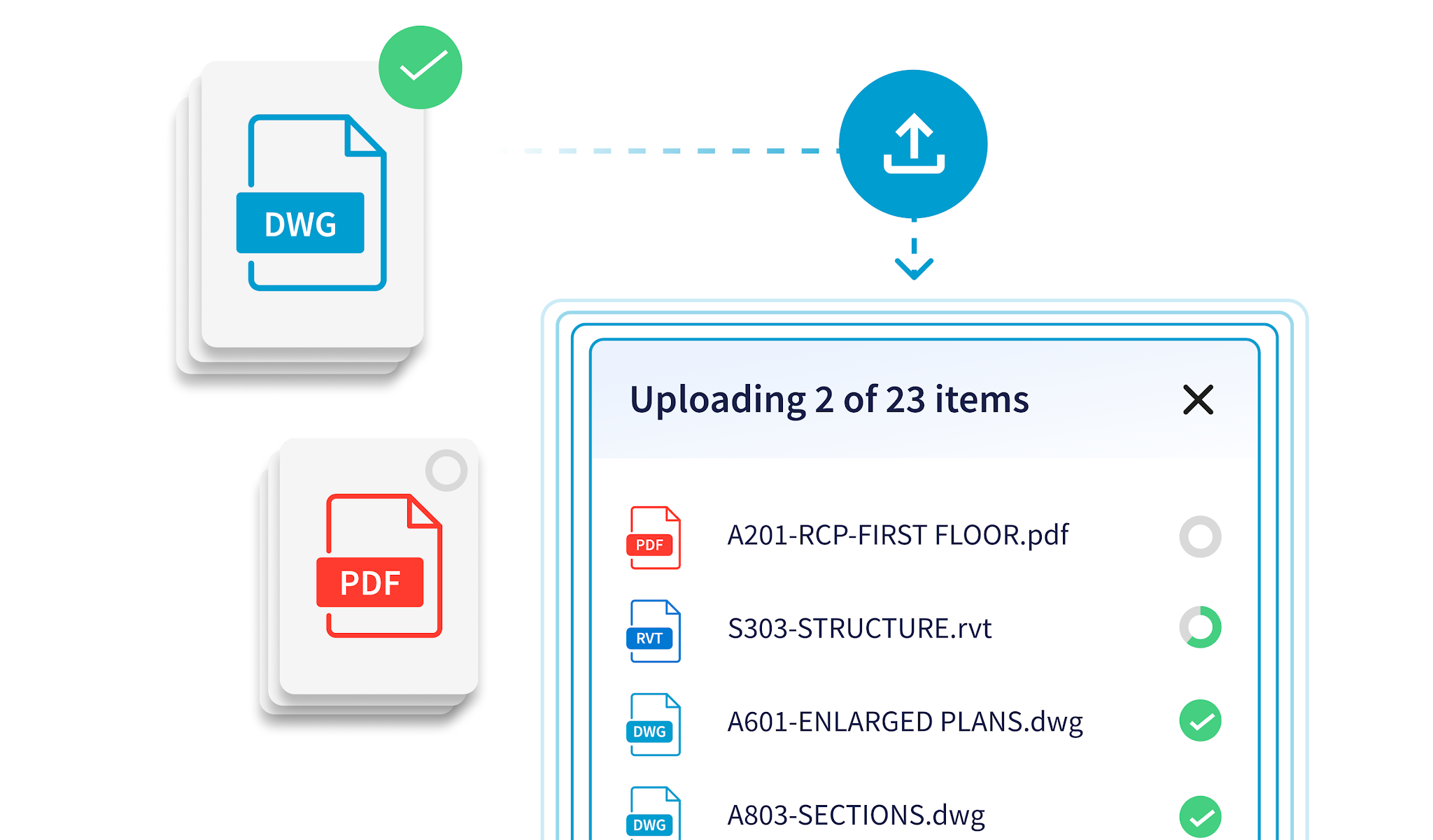
During construction, cloud enables real-time access to drawings, schedules, inspections, and checklists. Site teams can upload progress updates, flag issues, and sync documents from the field—keeping everyone aligned, no matter the complexity.
By tracking daily progress and automating document workflows, teams streamline contractor coordination and avoid delays caused by disconnected tools or site-office miscommunication.
This field-first shift is reflected in adoption data—41% of firms reported using cloud-based time tracking in 2025—bringing accountability directly to the jobsite. Explore how CUBE supports contractors in the field.
3. Operations & Maintenance (O&M): Empowering Long-Term Asset Management
Once construction is complete, cloud-based platforms support facility managers with digital twins, asset metadata, and centralized O&M documentation. This enables quicker turnaround on maintenance tasks and ensures the facility remains operational, safe, and efficient.
Stay ahead with scheduled maintenance alerts, mobile-ready checklists, and asset history access—reducing costly downtime and ensuring long-term asset performance without missing records.
Cloud vs. On-Premise Construction Software: A Quick Comparison
One of the most common questions buyers ask is whether a cloud platform is genuinely better than a traditional on-premise system. The table below breaks down the key differences.
The market is voting decisively for cloud: the cloud segment is forecast to account for 54.17% of the construction software market in 2026, per Fortune Business Insights.
Key Statistics: Cloud Adoption in Construction
The shift toward cloud platforms is backed by third-party industry research:
- 61% of contractors said project management was their most prevalent use of cloud-hosted technology in 2025, up 3 percentage points year over year, according to the AGC of America 2025 Outlook.
- 48% of firms reported using cloud technology for accounting in 2025.
- Only 20% of surveyed contractors said they do not use the cloud in 2025—leaving cloud adopters in the clear majority.
- 28% of firms cited integration between internal software as a top IT challenge in 2025, reinforcing the value of unified platforms.
- The global construction management software market was valued at USD 7.7 billion in 2025 and is projected to reach USD 16.4 billion by 2033—a 10.2% CAGR—per Grand View Research.
CUBE's Cloud Advantage
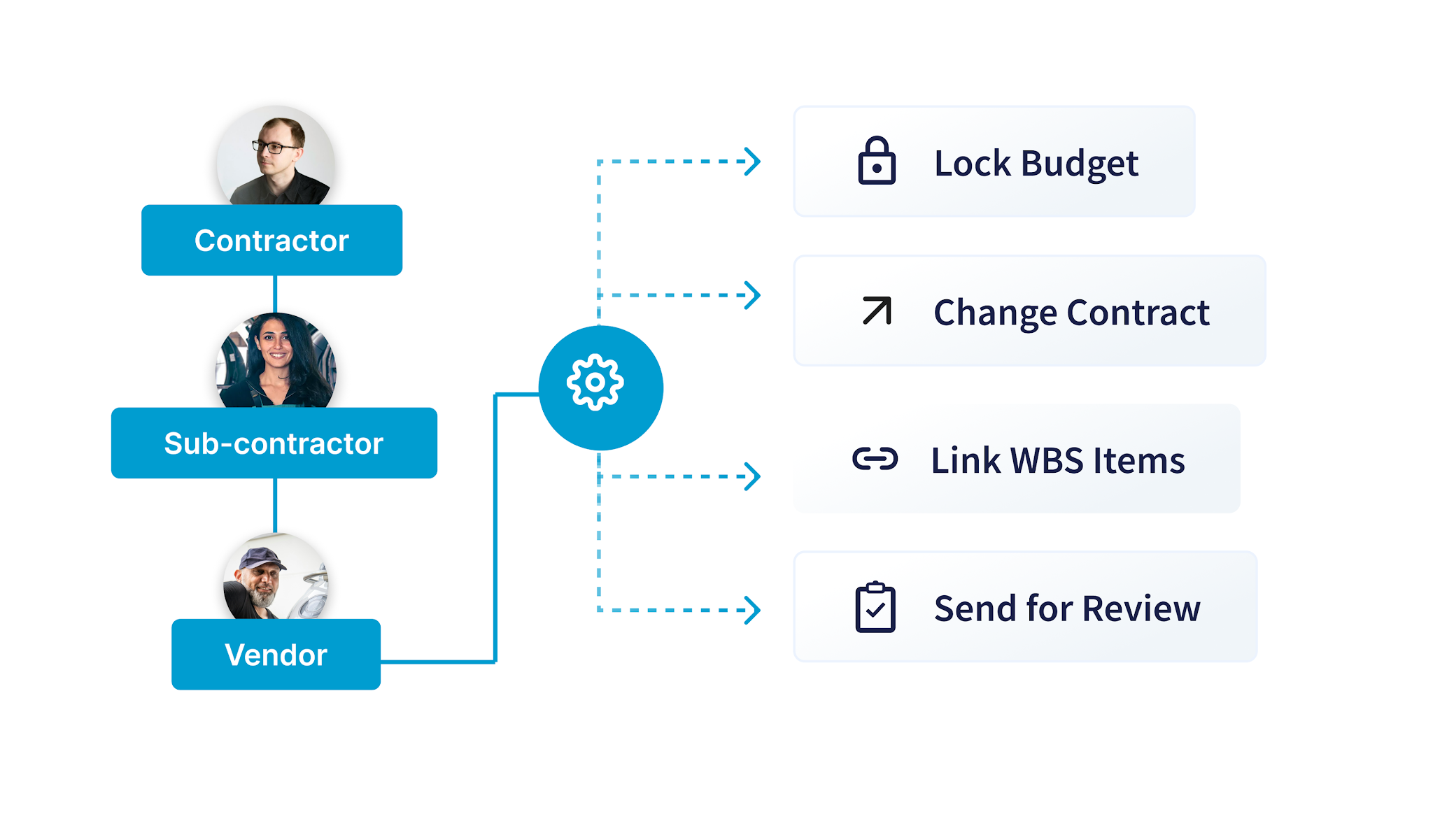
CUBE is a cloud-first construction management platform that unifies BIM models, documents, schedules, and approval workflows in one secure environment—so every stakeholder works from the same live data.
CUBE's cloud-first architecture ensures that every stakeholder, whether on-site or in the office, works from the same, most up-to-date information. From real-time BIM model access to automated document versioning, our platform centralizes the entire project ecosystem in one secure environment.
Teams can review designs, track schedules, set and configure approval workflows, and monitor site progress without being tied to specific devices or locations.
With enterprise-grade security, scalable access, and seamless integration across project phases, CUBE transforms cloud capabilities into measurable results: faster decisions, reduced rework, and complete project transparency.
Want help evaluating options? Read our guide on how to select the right construction management software, or explore CUBE's project management capabilities.
Conclusion
Cloud-based construction platforms have moved from competitive advantage to industry baseline. By centralizing collaboration, data, and security across the design, execution, and operations phases, they help teams cut rework, accelerate decisions, and maintain a single source of truth from Day 1 through long-term asset management. With cloud now the dominant deployment model and adoption climbing across project management, field operations, and accounting, the question is no longer whether to move to the cloud—but how quickly you can unify your workflows to keep pace.
Frequently Asked Questions
What is a cloud-based construction platform?
A cloud-based construction platform is a web-hosted software-as-a-service (SaaS) system that centralizes project communication, documents, BIM models, schedules, and approvals in one online environment. Teams access it from any browser or device, so everyone works from the same live data without installing heavy local software.
How do cloud platforms improve construction project delivery?
They provide real-time access to drawings, schedules, and site data; enable multiple stakeholders to collaborate simultaneously; and automate version control and document workflows. This reduces rework from outdated information, speeds up decisions, and prevents the delays caused by disconnected tools and site-office miscommunication.
What are the main benefits of cloud construction software?
The core benefits are seamless cross-team collaboration, centralized data for clarity and control, faster decision-making through real-time dashboards, and built-in security and compliance via encryption, ISO/SOC 2 certifications, and role-based permissions—all delivered across the full project lifecycle.
Is cloud construction software secure?
Reputable platforms use enterprise-grade protections including encrypted workflows, ISO and SOC 2 certifications, and role-based access controls. This matters because 41% of firms cited keeping company data secure from hackers as a top IT challenge in 2025, making certified security a key selection criterion.
How widely is cloud technology adopted in construction?
Cloud is now mainstream. Only 20% of surveyed contractors said they do not use the cloud in 2025, while cloud accounted for 63.83% of construction management software market revenue that year, making it the leading deployment model.
Does a cloud platform support the whole construction lifecycle?
Yes. A single cloud platform acts as a digital thread connecting the design phase (collaborative BIM and clash detection), the execution phase (field updates, inspections, and time tracking), and operations & maintenance (digital twins, asset metadata, and maintenance alerts) without data loss between stages.
.png)
.png)